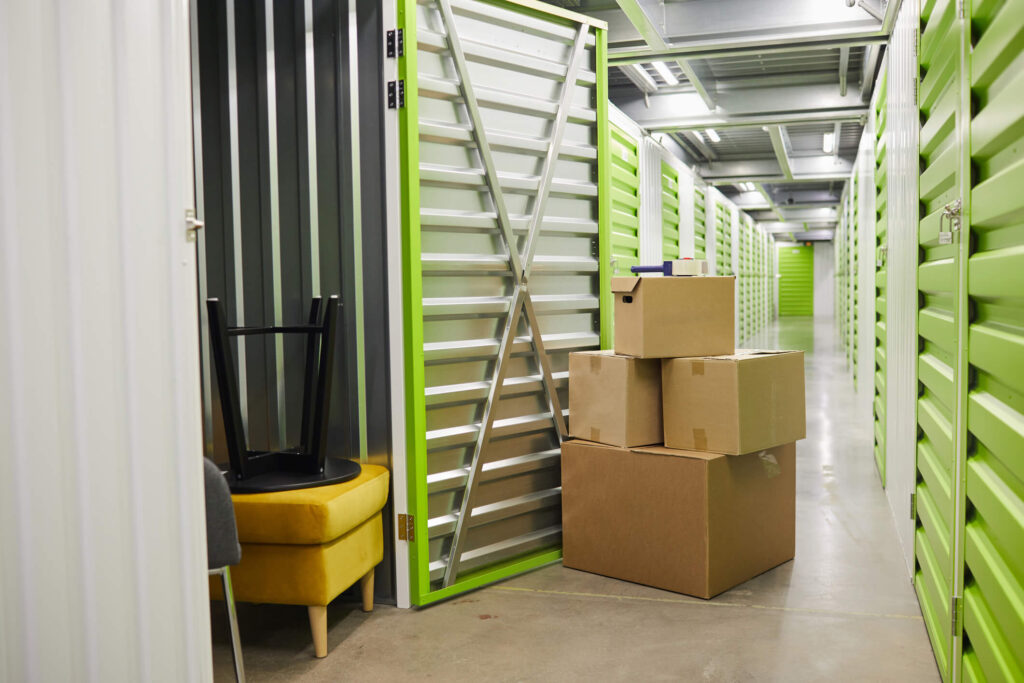
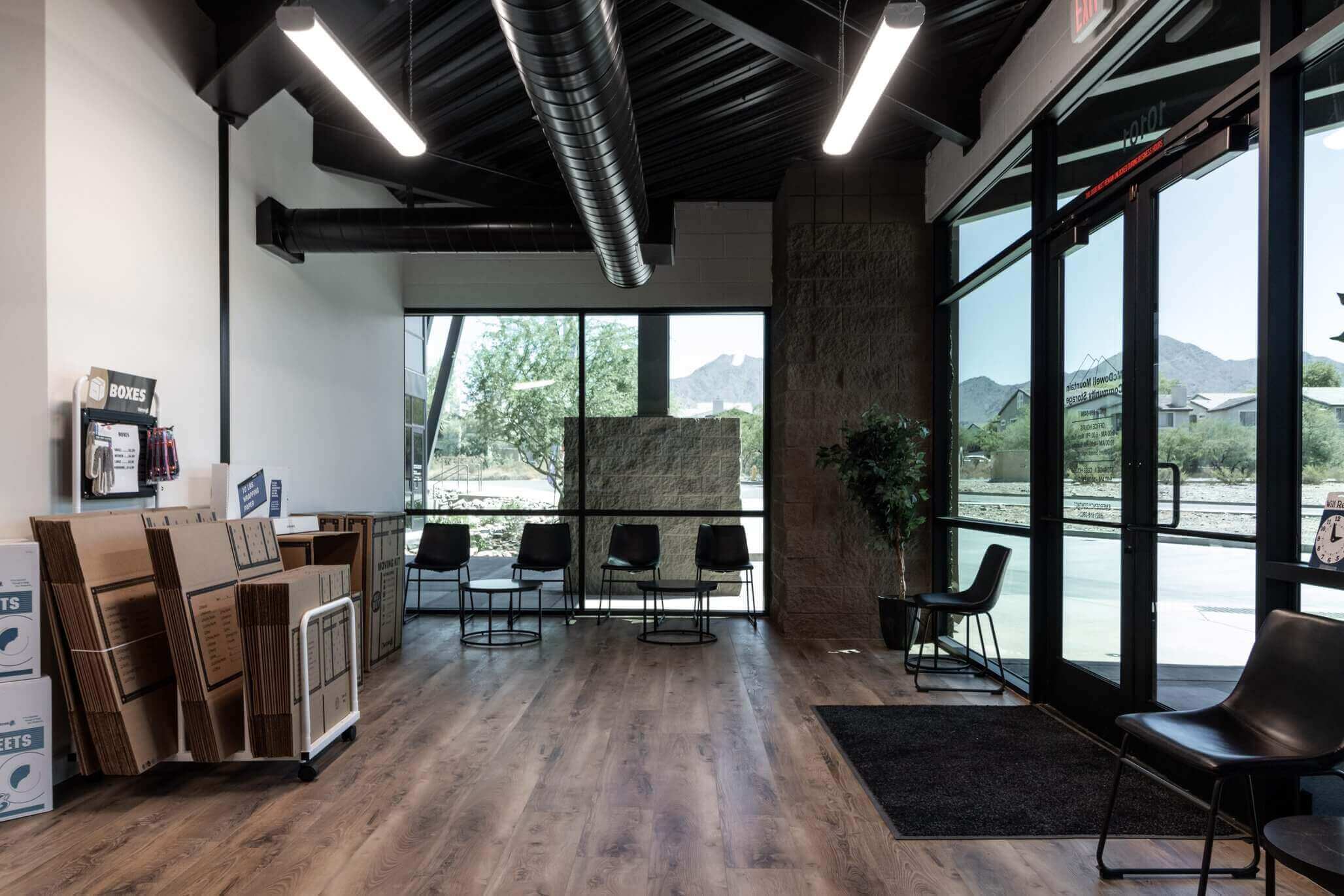
When you’re ready to simplify life, reduce clutter, and embrace minimalism, moving from a larger house or condo into a smaller home means making thoughtful decisions about your belongings. At McDowell Mountain Community Storage, we understand that downsizing isn’t just about letting go — it’s about optimizing space and creating comfort. Smart use of shelves, compact furniture, and storage units helps you organize efficiently while keeping what truly matters most.
By maximizing every square foot, you can transform a smaller home into a functional, open space that reflects your lifestyle. Use your storage unit to safely keep extra items, seasonal décor, or a lot of treasured photos you’re not ready to part with. With the right strategy, downsizing becomes an opportunity to optimize your living space, reduce clutter, and enjoy a cleaner, more intentional way of living.
Establishing a Downsizing Plan and Inventory of Belongings
The first step in the downsizing process is to create a clear plan and inventory of your possessions. Start by listing the items and belongings you own — from furniture and appliances to photo albums, books, and household items. Understanding what you have helps you make decisions about what stays, what goes, and what might be best moved into storage.
Here are detailed steps for building your inventory:
-
Walk through each room (living room, kitchen, bedroom, basement, garage) and note down every item, whether large (sofa, couch, furniture) or small (books, photo albums, containers).
-
Measure each piece of furniture or large item you plan to keep: length, width, height. These measurements will matter when planning your new space or storage unit.
-
Count boxes, bins, and storage containers already in use (for seasonal items, photo albums, documents, heirlooms).
-
Record the reason or purpose for each item: “I use this once a year,” or “family heirloom,” or “daily appliance.” Such annotation helps clarify what must remain in the home vs. what can be stored or let go.
-
Estimate the amount of space each category occupies (for example: six bookcases of books, three large boxes of childhood memorabilia).
Having a detailed inventory gives you a foundation for the downsizing strategy and helps you evaluate storage options, storage unit size, cost, and how much to move into storage vs. keep in the home.
Decluttering and Sorting Items for Downsizing
Once you have your inventory and plan, the next vital step is decluttering — sorting through your items and making decisions about what stays, what goes, and what moves to storage. This is a critical part of the downsizing process because clutter and excess belongings often create stress and block the path to a simpler life. To declutter your home fast, start small and focus on one room or section at a time, setting clear goals for each session. Involve your family members to share ideas and find ways to maximize space efficiently, whether at home or in your storage area. Use technology to organize information, track progress, and stay on the road to a smoother move — especially if you’re balancing business, personal needs, and home transitions all at once.
Here’s how to tackle decluttering effectively:
Create sorting categories
-
Use boxes or containers labeled “Keep in Home,” “Move to Storage,” “Sell / Donate,” “Recycle / Discard.”
-
For items you rarely use but want to keep (e.g., out-of-season clothing, heirlooms, photo albums), assign them to “Move to Storage.”
-
For things that are broken, outdated, or unused (appliances that no longer work, duplicate items, old décor), assign them to “Recycle / Discard” or “Sell / Donate.”
Apply practical rules
-
Follow the “20/20 rule”: if an item can be replaced for under $20 and within 20 minutes, it’s a candidate to let go.
-
Consider if you have multiples of something (two or three of the same appliance or piece of furniture). One may suffice.
-
Ask yourself whether each item is still useful, still loved, or still fitting your new lifestyle. If not, it may be time to part with it.
Use containers and storage boxes
-
As you sort, use labeled boxes, bins, and containers to group similar items — holiday décor, photo albums, sentimental items, kids’ toys.
-
Stackable containers make it easier to move things into a storage unit later.
-
Keep a written or digital list of what’s inside each box, so you maintain access and track what is being moved.
Tackling emotional items
-
Family heirlooms, photo albums, childhood memorabilia, and other sentimental pieces often cause the most hesitation. Decide if they need to stay in your living space or if they can live in a storage unit for lesser-frequent access.
-
If certain pieces are purely for memory rather than daily use, moving them into storage can free up valuable living space while preserving their value.
Choosing the Right Storage Unit Size and Features
Selecting the right storage unit is a key strategic move in your downsizing journey. Before choosing, ask yourself a simple question: what do you truly need to keep close, and what can rest securely elsewhere? Consider your situation, family size, children, animals, and even your city’s storage options. The right unit should fit your lifestyle and the details of your daily routine. In fact, involving friends or family can help you generate the best idea for organizing each section efficiently. Remember, bringing in too many items or picking the wrong size unit can turn a helpful task into unnecessary clutter — so plan carefully and store only what truly matters.
Evaluate your storage needs
-
Based on your inventory, estimate the number of boxes, containers, furniture pieces, and large items (appliances, furniture) you’ll move into storage.
-
Consider the footage and layout of your storage unit relative to the size of your items. Many storage companies provide size guides.
-
Take into account whether you want access to your items frequently (e.g., seasonal décor, kids’ toys) or rarely (archives, old documents). That will affect what type of unit makes sense and how you organize it.
Features to look for in a storage facility
-
Climate-controlled units: ideal for items like photo albums, documents, heirlooms, leather furniture.
-
Good shelving and layout: enables better access, organization, and maximizes the storage space.
-
Secure access and monitoring: peace of mind for your valuable items.
-
Several unit sizes and flexible lease terms—helpful for phased moving.
-
Nearby location to your home or move path: simplifies the move-in logistics and costs.
Estimate cost and value
-
The cost of the storage unit must be weighed against the value of freeing up living space and downsizing your home.
-
Often renting a smaller unit short-term during your transition can be a strategic move: store furniture temporarily while you finish the move, sell items, or settle into your new home.
-
Compare different storage solutions and companies to find the best value and flexibility.
Using Storage Strategically During the Move and Transition
The move itself is a major part of the downsizing process. Whether you’re relocating within your city or to a new zip code, using a trusted storage company can make all the difference. Here’s how you can use the storage unit as part of that strategy to reduce stress, optimize space, and manage your transition smoothly. Coordinate with others or someone you trust to handle your collection of items carefully, ensuring your rights are protected. You can also donate belongings to goodwill or local locations to simplify your move and make a positive impact while keeping only what truly matters — without holding on to anything unnecessary.
Creating a staging zone
-
Before you move into the smaller space or your new home, use the storage unit as a staging zone. Move large furniture or appliances there temporarily, especially if you’re selling or re-arranging rooms.
-
Use the storage unit to hold items that you’re unsure about — give yourself a checklist: if you don’t retrieve them in 3 or 6 months, they may be ready to be sold or donated.
Prioritize what goes direct to new home
-
Some items must go directly to your smaller space: everyday furniture, appliances, boxes of daily use items.
-
Items that are seasonal, rarely used, or purely for memory value can go to the storage unit.
-
This approach helps keep your new living space tidy and avoids bringing in unnecessary stuff.
Coordinate with movers and schedule
-
Use the storage facility’s schedule and access hours in planning your move.
-
Arrange the timing so your move-in to the smaller home, the storage unit drop-off, and any sale or donation of unwanted items all align.
-
The use of a storage unit can reduce rush, giving you breathing room and less pressure during the move.
Managing cost and access
-
If you plan to access the unit frequently (for seasonal items, holiday décor, family heirlooms), choose a facility with convenient access hours and reasonable unit size.
-
If there is infrequent access, you may choose a unit in a less premium zone — cost savings matter.
-
Keep a list of what’s in the storage unit, the date moved in, and your planned revisit date.
Maximizing Your Living Space After Downsizing
Once you’ve moved into your smaller home or condo and stored the selected items, the work of making the most of your new living space begins. In this case, taking care to plan your layout and stock only what you truly need helps maintain balance and comfort. This is where smart shelving, furniture choices, containers, and minimalist lifestyle changes pay off. By organizing your daily activities efficiently, taking advantage of dead space, using vertical storage, and choosing multi-functional furniture, you can create a practical and peaceful home that feels open and inviting.
Optimizing furniture and space
-
Choose furniture that serves double duty (for example: a couch with hidden storage, an ottoman that lifts for storage, a table that folds down).
-
Use vertical shelving in closets, living rooms, and even kitchens — free up floor space by going up.
-
Install shelving or containers in under-used spaces (under stairs, above door frames, over tubs).
Using containers, bins, and boxes
-
Clearly label boxes and containers so you know exactly what each holds — this reduces stress when you need to retrieve something later.
-
Use stackable bins, nesting containers, vacuum bags for off-season clothing or linens, and storage boxes for photo albums and documents.
-
Keep a list or digital record of how many boxes you have, what’s inside, and where they are located (home vs. storage unit).
Living with less “stuff”
-
Transitioning to a smaller home often means adopting a more minimalist lifestyle. Sort, donate, recycle, arrange, and simplify your items and belongings.
-
Keep only what adds value to your life, purpose to your space, or brings you comfort. If some items are purely sentimental but rarely used, the storage unit may serve as their home rather than your living room.
-
Regularly revisit your “Keep in Home” list and adjust — items may shift to storage or be removed entirely.
Maintain efficiency and ongoing organization
-
Avoid letting piles of boxes or unsorted items creep back into your home. Use the 80/20 rule: fill only about 80% of your shelf or storage volume and leave 20% empty to allow breathing room and avoid clutter.
-
Scheduled check-ins: once a quarter, review your closets, drawers, and containers. Ask: Do I need these items? When was the last time I used them?
-
Keep the path of access simple: label everything, keep frequently used items in easy-reach containers, and store rarely used items in less convenient places (or in the storage unit).
Financial Considerations and Value of Using Storage
Downsizing isn’t just about space — it’s also about money, value, and how you use your resources. Using a storage unit as part of your plan can make financial sense if approached wisely, especially when you apply smart strategies and tips to save on storage unit costs throughout the process.
Budget and cost estimation
-
Estimate the cost of your storage unit (monthly rent, insurance, transportation).
-
Compare that to your potential savings by moving into a smaller home: lower rent or mortgage, lower utilities, less maintenance, less energy use.
-
Consider selling items you don’t need (garage sale, online marketplace) to generate cash that offsets moving or storage costs.
Value beyond dollars
-
Extra open space in your smaller home translates into comfort, less stress, fewer belongings to maintain, and more time and energy for other aspects of life (family, retirement, hobbies).
-
Having a well-organized storage unit means you can keep items with sentimental or financial value (family heirlooms, photo albums, documents) without them cluttering your everyday environment.
-
The decision to keep items but store them securely means you don’t have to “get rid of everything,” you’re just relocating them.
Long-term cost optimization
-
Use the storage unit as a transition tool: during the move, you may need to keep some furniture or items temporarily while you sell, donate, or reconfigure.
-
After a set period (6-12 months), evaluate what remains in the unit. If you haven’t accessed something in that time, you might sell or donate it, reducing storage cost further.
-
Keep track of each item’s value: if it costs more to store than it’s worth or used, then it’s time to make a hard decision.
Practical Tips and Checklist for Downsizing With Storage
Below is a practical checklist to guide your use of storage while you downsize your home:
-
Create an inventory of items, including furniture, appliances, containers, boxes, photo albums, documents.
-
Measure large pieces and furniture, note sizes in your plan.
-
Sort all your belongings into “Keep in Home,” “Move to Storage,” “Sell/Donate,” and “Recycle/Discard.”
-
Choose appropriate storage unit size and features, based on your inventory and access needs.
-
Use labelled boxes and containers for items heading to storage – record what’s inside each.
-
Stage your move: use storage as a buffer zone during transition, put less-used items there.
-
Move daily-use items directly into your smaller home; redirect seasonal or rare-access items to storage.
-
Select furniture and storage solutions in your new home that maximize vertical space, under-used areas, and double-duty pieces.
-
Implement a regular maintenance rhythm: review closets, drawers, containers quarterly; use the 80/20 rule to avoid overfilling.
-
Review your storage items after 6-12 months: assess access frequency, cost, value, and decide if you still need them.
-
Sell items you no longer need via garage sale, donation, or resale platforms to generate cash and reduce cost.
-
Maintain a list or digital record of what’s in your storage unit, where it’s located, and when you may revisit it.
Addressing Common Challenges and Solutions
Challenge: Overwhelm at the beginning
You may face a daunting number of boxes, furniture items, or decisions. The solution: break it down into rooms and sections, tackling one at a time — closet, kitchen drawers, basement, or garage. This step-by-step approach not only reduces stress but also brings the benefits of clearer organization and smoother progress throughout your downsizing journey.
Challenge: Emotional attachment to items
Many people struggle to let go of belongings for reasons of memories, family, or future “someday use.” The solution: allocate those sentimental items to your storage unit rather than your main living space — you retain them without crowding your life.
Challenge: Lack of space in new home
Smaller homes, apartments, or condos often have less closet and storage space. The solution: use the storage unit for overflow items and invest in smart shelving and containers inside your home.
Challenge: Unclear budget or ongoing storage cost
Storage costs add up if you don’t revisit them. The solution: treat the unit as part of your downsizing budget, plan for a defined time-frame, and regularly assess whether items are still needed.
The Mindset Shift — From a Big House to a More Intentional Home
Downsizing isn’t just a move, it’s a mindset shift. The way you view your belongings, space, and living environment changes. You’ll move from “everything I own” to “everything I keep is intentional.”
-
Focus on purpose: each piece of furniture, each container, each box has reason behind it.
-
Embrace less is more: fewer belongings means less maintenance, less cleaning, less stress.
-
See the storage unit not as exile for unwanted items but as a strategic extension of your home — one place where you keep items that support you, even if they’re not in daily reach.
-
Recognize the value in freeing up your living space: more light, more movement, more comfort, more ease.
-
Use your new smaller space as an opportunity to reshape your lifestyle: rearrange rooms, rethink how you use areas (living room, guest room, home office).
Smart Storage Solutions Supporting Your Downsizing Journey
At McDowell Mountain Community Storage, we provide the storage solutions you need during and after your downsizing process. Here’s how we help:
-
A variety of unit sizes so you only pay for the space you actually need.
-
Flexible lease terms to align with your move schedule and transition.
-
Secure, climate-controlled units for your valuable items: photo albums, family heirlooms, documents.
-
Convenient access that makes retrieving boxes or containers easy, should you need to.
-
Professional staff that can help you with advice, whether you’re in the discovery phase of your inventory or unpacking after your move.
-
Proximity to your new home can reduce transportation costs, make the move smoother, and integrate easily into your strategy.
Final Thoughts — Streamline Your Belongings, Maximise Your Space, Enjoy Your Life
Downsizing your home is about aligning your space with your lifestyle, priorities, and future goals. By creating an inventory, sorting items, choosing the right storage unit, and staying organized, you gain freedom, flexibility, and a home that truly fits your needs.
Whether moving to a smaller apartment, transitioning into retirement, or simply embracing minimalism, smart storage helps you simplify and optimize your environment. Remember — it’s not about how much you keep, but how well your space supports your life. Use storage wisely, reduce clutter, and enjoy a more intentional, balanced home.
Frequently Asked Questions
1. How far in advance should I start planning my downsizing and storage process?
Begin planning at least 2–3 months before your move to allow enough time to sort, declutter, and choose the right storage options.
2. What’s the best way to decide between renting a storage unit or using home-based storage solutions?
If you need extra space during transition or for long-term items, a storage unit is best; if it’s for short-term overflow, use in-home solutions like shelves or compact containers.
3. How do I keep track of what’s stored without constantly visiting my storage unit?
Use a digital inventory or storage app with photos and item lists to track what’s stored and where.
4. What items should never be placed in a storage unit?
Avoid storing perishable food, flammable materials, live plants, animals, or hazardous chemicals.
5. Can I store business inventory or documents while downsizing my home office?
Yes — climate-controlled units are ideal for storing business documents, equipment, and stock securely.
6. How do I prepare fragile or valuable items for long-term storage?
Use bubble wrap, sturdy boxes, and moisture barriers; label boxes “fragile” and place them on shelves rather than the floor.
7. What should I look for in a storage facility’s security features?
Check for gated access, 24-hour video monitoring, individual locks, and proper lighting for safety and peace of mind.
8. How can I make my storage unit easy to access and organize later?
Place frequently used boxes in front, label all sides, and leave walking space down the middle of the unit.
9. Are there insurance options for items kept in storage?
Yes — many facilities offer storage insurance, or you can extend your homeowner’s or renter’s policy to cover stored belongings.
10. What are some long-term benefits of using storage while downsizing?
It allows flexibility during life transitions, protects sentimental or seasonal items, supports a minimalist home, and reduces stress while you adjust to your new space.