Organizing Your Small Storage Unit: Expert Do’s and Don’ts

At McDowell Mountain Community Storage, we understand that maximizing the space in a small storage unit can be challenging. Whether you’re storing furniture, seasonal items, documents, or business inventory, taking time to declutter and categorize your belongings before placing them in the unit is essential. By carefully sorting and arranging your things, you can create a system that makes every inch of space functional. Our team works with you to systematize your storage, ensuring that every item has a designated place and nothing gets lost or damaged over time.

We also know that storing something in a small unit requires thoughtfulness, rather than simply piling boxes or containers. With our guidance, you can efficiently arrange and categorize your belongings, declutter unnecessary items, and maximize the benefits of your self storage experience. From labeling boxes to creating accessible pathways, we help you implement strategies that keep your unit tidy, organized, and easy to navigate, regardless of the size or type of items you are storing.

Prioritize Planning Before You Pack

Before placing any items in your storage unit, we recommend taking time to assess your storage needs and review what other storage facilities offer. Consider the size of your unit, the types of belongings you plan to store, and how often you’ll need access. Creating a plan enables us to recommend the ideal storage unit size, shelving options, and packing materials, providing you with a clear understanding of how to maximize your space. Our menu of available unit sizes and features helps you choose the one that fits best. Browsing helpful articles and guides can also provide valuable organization tips.

We also advise creating an account to keep track of your rental, payments, and unit details, and making a comprehensive list of all items, categorizing them by use and priority. Store frequently used items near the front of the unit for easy access, while seasonal or long-term items can go toward the back. With this thoughtful planning, your small storage unit can feel spacious, organized, and easy to navigate, even if it’s only a few hundred square feet.

Use Shelves and Containers to Maximize Space

One of our most effective tips is to utilize shelving and containers whenever possible. In other words, shelves allow you to utilize vertical space, keeping items off the floor where moisture, pests, or mold could become a problem. Clear plastic containers are handy, as they allow you to see your items without opening every box and provide protection against dust and pests. Taking a little bit of extra time to sort your belongings before placing them on shelves makes a big difference in organization and accessibility.

When stacking boxes, we suggest placing heavier items on the bottom and lighter ones on top. Using uniform-sized containers creates a compact and stable stack, which prevents tipping and maximizes every inch of your unit. Considering factors such as item size, fragility, and storage locations within the unit helps ensure that everything is stored efficiently. Our self-storage facility provides all the information and guidance you need to place another layer of boxes safely, maintaining a tidy and well-organized space.

Label Everything Clearly

Labeling is one of the simplest yet most effective ways to stay organized. At McDowell Mountain Community Storage, we encourage customers to label each box or container with its contents clearly. Label the top and sides of each box so you can easily identify items without having to move multiple boxes.

Maintaining an organized labeling system helps anyone accessing the unit—whether it’s you, our team, or a family member—locate what’s needed quickly and efficiently. A well-labeled unit also saves time, reduces the risk of damage from shifting boxes, and ensures your inventory remains easy to manage.

Keep Frequently Used Items Accessible

Accessibility is critical in a small storage unit. We advise placing items you need most often near the front. This approach reduces the time spent moving boxes and keeps your storage experience efficient. Items like seasonal clothing, documents, or appliances you use occasionally should still be easily accessible without unpacking the entire unit.

Creating clear paths in your storage unit and avoiding overpacking the middle can improve access and safety. Our team can advise on layout strategies to optimize space and ensure every inch of your unit is functional.

Store Furniture and Large Items Wisely

When storing furniture, mattresses, or large appliances, we suggest using proper covers to protect them from dust, weather fluctuations, and pests. Keep mattresses upright and off the floor when possible. If you have multiple pieces of furniture, consider disassembling them to save space and placing protective padding between pieces to avoid scratches or damage.

Using our storage facility’s Storage Tips on shelving and floor layout ensures that even large items fit without creating hazards. By planning the arrangement of bulky goods, you maintain room for smaller boxes and containers, making the unit more organized overall and maximizing every inch of your storage space.

Avoid Storing Perishable or Unsafe Items

One of the key don’ts we emphasize is storing perishable food, plants, or anything that could attract pests. Food can spoil and create mold, while plants may not survive in fluctuating temperatures. Similarly, avoid storing hazardous materials such as flammable liquids, chemicals, or explosives.

Our self-storage units are designed for personal and business belongings, with climate-controlled options available for sensitive items. Following these safety measures protects your items and ensures the storage facility remains secure for everyone.

Protect Documents and Valuables

For important documents, photos, or valuable items, we recommend using waterproof containers and keeping them off the floor. Creating a dedicated container for paperwork, financial records, or sentimental goods allows us to advise you on additional security measures, such as locks or insurance options.

We also suggest maintaining a digital inventory or photo record of your stored belongings. This helps track what’s in your unit, simplifies insurance claims if necessary, and allows you to locate items quickly without having to dig through boxes.

Maximize Vertical Space Without Overloading

Vertical stacking is a key strategy in small storage units, but there’s a delicate balance between maximizing space and maintaining safety. We advise against stacking boxes too high or placing cumbersome items. Using shelving units ensures that even the topmost levels remain stable, accessible, and safe.

Our storage facility offers guidance on load distribution and space utilization, ensuring that every shelf and container serves its intended purpose without compromising the integrity of your items or unit structure.

Keep an Organized Layout With Zones

Creating zones within your unit can significantly improve organization. At McDowell Mountain Community Storage, we recommend dividing the unit into separate areas for different categories, including clothing, seasonal items, documents, appliances, and business inventory.

Zoning prevents mixing items, reduces the time spent searching, and keeps your storage unit organized and tidy. Use bins, containers, or even temporary dividers to keep categories separate, ensuring a neat system that maximizes efficiency.

Implement a Tidy Packing Strategy

Packing efficiently starts with selecting the right boxes and containers. We suggest using sturdy, uniform-sized boxes that fit together well. Avoid overpacking boxes to prevent damage. Cushion fragile items with padding or materials like bubble wrap or towels.

When placing boxes in the unit, consider stacking by size and weight. Heavy items should be placed at the bottom, and lighter, less dense items should be placed on top. This approach prevents crushing, optimizes storage space, and maintains the safety of all your belongings.

Don’t Overcrowd or Block Access

A common mistake we see is overfilling a storage unit to the point that access is blocked. While it’s tempting to maximize every inch of space, overcrowding reduces accessibility and increases the risk of damage or injury.

Leave walkways and space to maneuver, especially if you plan to visit the unit frequently. Our team can help you identify layout strategies that strike a balance between capacity and accessibility, ensuring you can retrieve items with ease.

Use Climate-Controlled Options When Needed

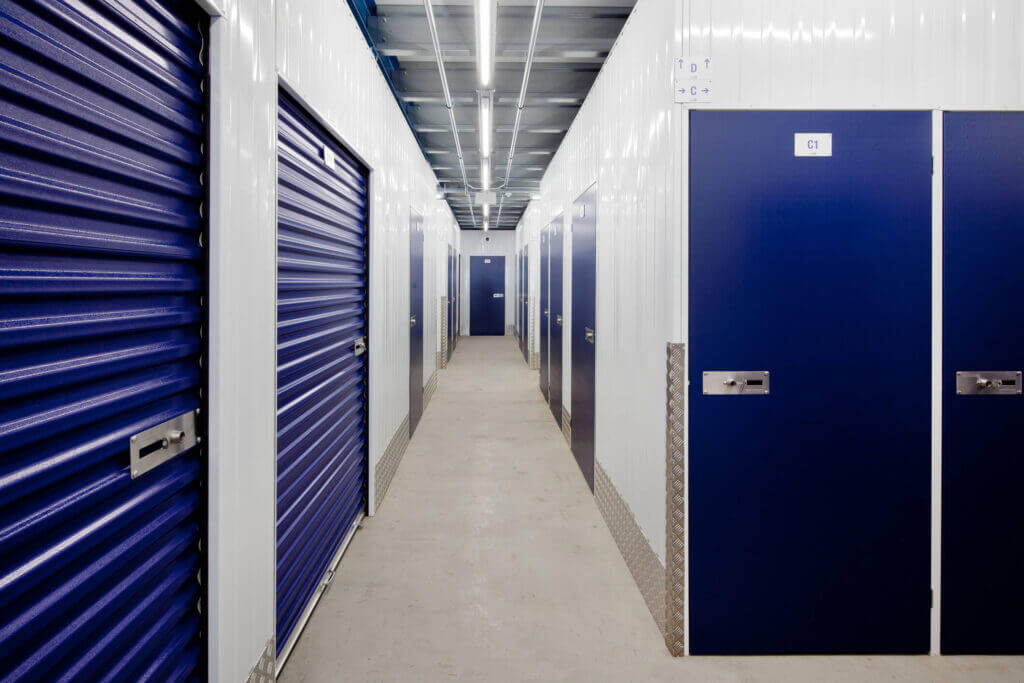
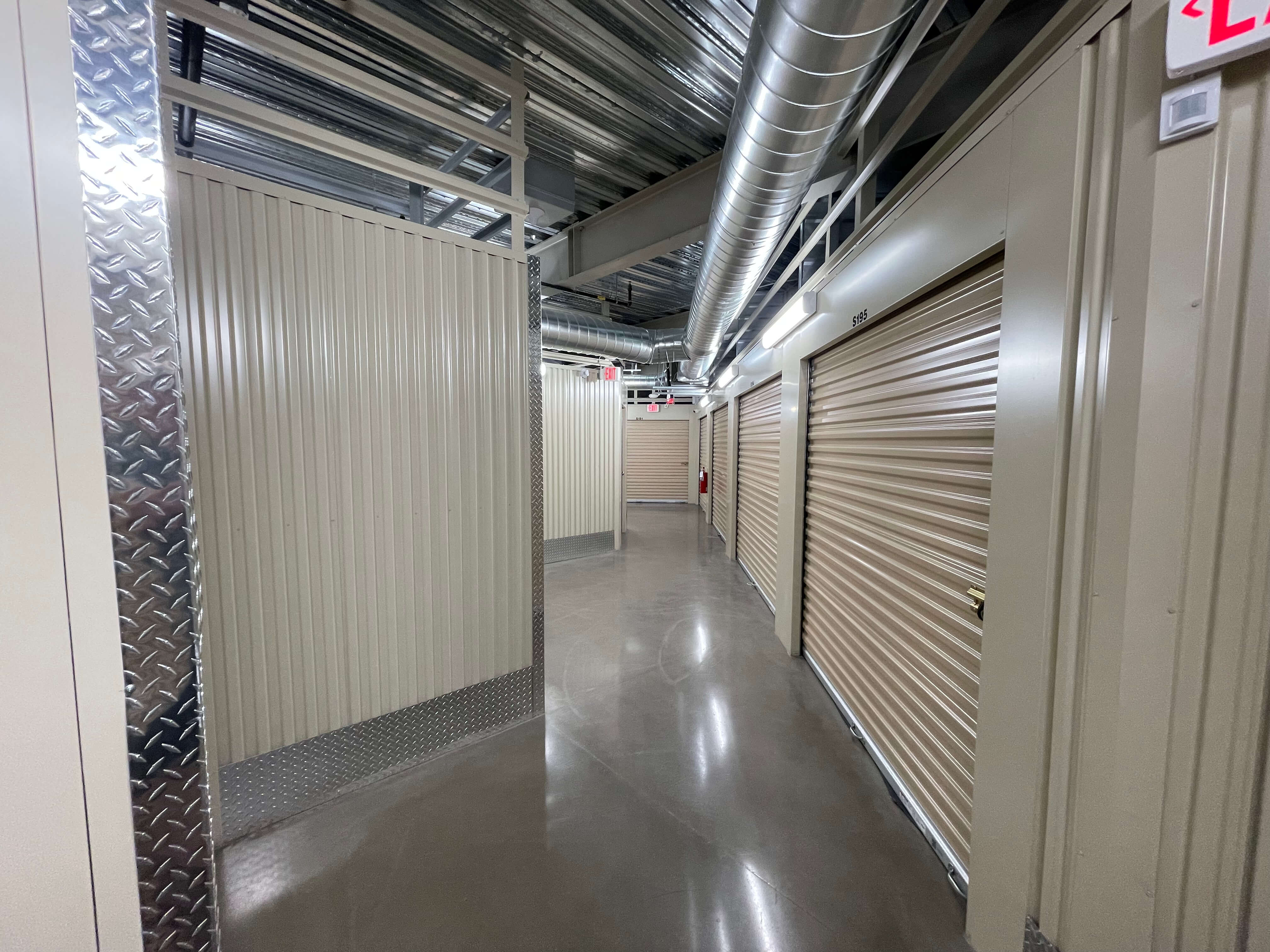
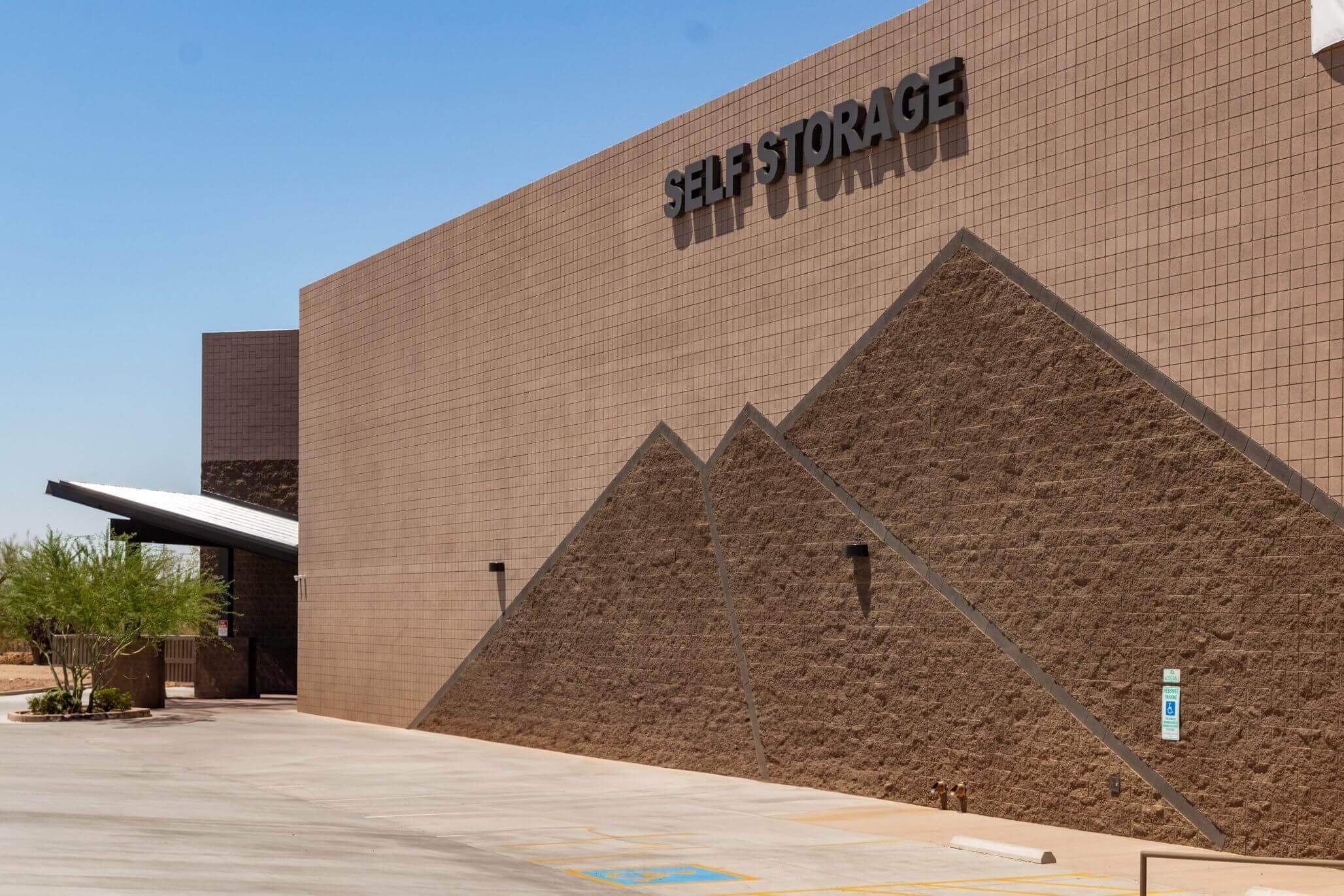
Small storage unit neatly organized with labeled boxes shelves and containers at McDowell Mountain Community Storage in Scottsdale Arizona
Expert tips for arranging and organizing a small storage unit at McDowell Mountain Community Storage in Scottsdale Arizona

Certain items, such as electronics, wooden furniture, or sensitive documents, benefit from climate-controlled storage. We offer units with temperature and humidity control to protect items from mold, weather, and other forms of deterioration.

Choosing the right self-storage unit for your contents prevents long-term damage and ensures your items remain in the same condition as when you stored them. Our customer service team can help you find the ideal unit type and features that match your storage needs.

Maintain Security Measures

Security is a top priority for us. Our facility features gated access, surveillance cameras, and secure locks to protect your belongings. When storing valuable or sensitive items, consider additional personal locks or insurance for peace of mind.

Regularly reviewing your security measures and understanding the options available at our facility ensures that your storage experience is safe, convenient, and worry-free.

Keep an Updated Inventory

Maintaining an inventory of everything in your storage unit allows you to track items and plan for future storage needs. We encourage customers to note the contents of each box, its location within the unit, and the date it was stored.

An up-to-date inventory also helps with insurance claims, unit cleanouts, and planning for future storage needs. Digital tools or simple spreadsheets can streamline the inventory process, making it easy to manage even a small unit efficiently.

Label Boxes by Priority

In addition to labeling contents, we advise noting the priority of items on each box. Using labels such as “frequent access,” “seasonal, or “long-term storage helps us plan the layout and ensures that items are easily accessible when needed.

This method keeps your storage system organized, reduces unnecessary movement of boxes, and allows you to optimize the storage space in your unit.

Avoid Storing Damaged or Moldy Items

Before placing anything in a unit, check for damage, pests, or mold. Storing compromised items can harm other belongings and reduce storage efficiency. Cleaning, drying, and repairing items before storage ensures they remain in good condition and do not negatively impact other contents. Following our advice on item preparation helps you systemize your unit from the start, creating a safer and more organized storage environment.

We also recommend periodically inspecting your unit to catch any potential issues early, especially if you plan to store items for long periods. Regular check-ins allow you to adjust your organization strategy and keep your storage unit fully systemized for maximum efficiency.

Utilize All Available Storage Options

Our facility provides a variety of unit sizes and storage solutions. Using the appropriate size prevents overcrowding and ensures optimal use of space. Whether you need small units for documents or large units for furniture and appliances, we help you find options that match your budget, storage needs, and accessibility requirements.

Additionally, accessories like shelving units, protective covers, and specialized containers help optimize space and maintain organization. Our team can advise on the best combination for your unique storage situation.

Make Regular Visits to Stay Organized

Even with the best planning, small storage units require occasional maintenance. We suggest visiting your unit periodically to check for damaged items, reorganize boxes, and ensure the layout still meets your needs.

Regular visits also allow you to update your inventory, assess storage strategies, and address any potential security or accessibility concerns. Staying proactive keeps your storage unit efficient and clutter-free.

Choose the Right Facility Location

Location matters. Choosing a self-storage facility close to your home or business increases convenience, accessibility, and reduces travel time. At McDowell Mountain Community Storage, we prioritize customer accessibility by offering a location that is easily accessible and well-organized to meet all your storage needs.

An ideal location paired with professional customer service ensures your storage experience is smooth, secure, and reliable.

Take Advantage of Promotions and Services

We offer a variety of services, promotions, and storage solutions to enhance your experience. From flexible rental rates to additional security features, our team is here to help you maximize your storage space while staying within your budget.

Staying informed about available options enables you to adjust your storage strategy, expand your unit size as needed, and maintain an organized and efficient storage system.

Conclusion: Organized Storage is Achievable with Planning and Strategy

At McDowell Mountain Community Storage, even a small storage unit can be functional, tidy, and efficient when approached strategically. By planning, using shelving and containers, labeling items, maintaining accessibility, and adhering to our storage dos and don’ts, you can optimize every inch of your unit.

Our self-storage facility offers the tools, guidance, and services to make storage simple and stress-free. Whether you’re storing personal belongings, business inventory, or seasonal goods, following these tips ensures your storage experience is organized, safe, and tailored to your needs. With the right strategy, any small storage unit can feel spacious, manageable, and perfectly suited to your life.

Frequently Asked Questions

Can I store items directly on the floor of my storage unit?

While you can, we recommend using shelves or pallets to keep items off the floor, thereby avoiding moisture, pests, and mold damage. Proper elevation also makes your unit more straightforward to navigate.

How do I decide which items to place at the front versus the back of my unit?

Frequently accessed items, such as seasonal clothing, documents, or appliances, should be placed near the front. Long-term storage or bulky items are best toward the back for efficiency and accessibility.

What is the best way to protect fragile items in a small storage unit?

Use sturdy boxes with padding such as bubble wrap, towels, or foam. Clearly label fragile boxes and place them on top of heavier boxes to avoid crushing.

Is it necessary to use climate-controlled storage for small units?

It depends on the items. Electronics, wooden furniture, important documents, and photos benefit from climate-controlled units to prevent damage from temperature and humidity fluctuations.

How often should I visit my storage unit to maintain organization?

Periodic visits every few months are recommended. This allows you to check for damage, adjust the layout, update your inventory, and maintain accessibility.

Can I use mismatched boxes and containers in a small storage unit?

You can, but uniform-sized boxes are more space-efficient and stack safely. Clear containers also allow you to quickly identify contents without unpacking.

How should I store furniture, such as mattresses or large appliances, to prevent damage?

Keep mattresses upright, disassemble larger furniture if possible, and use protective covers to prevent damage. Place heavy items at the bottom and lighter items on top to prevent damage.

Are there any items I should never store in a self-storage unit?

Yes. Avoid perishable food, plants, hazardous materials, chemicals, or anything that could attract pests or create safety hazards.

What is the safest way to stack boxes in a small storage unit?

Stack heavier boxes at the bottom and lighter boxes on top. Consider shelving for vertical space and stability. Always leave walkways for easy access.

How can I create an efficient labeling and inventory system?

Label boxes on the top and sides with contents and priority (frequent access, seasonal, long-term). Maintain a digital or written inventory with detailed locations and dates to locate items and manage space effectively.
Your Guide to a 5×5 Storage Unit

At McDowell Mountain Community Storage, we understand the value of space. Whether you’re decluttering your apartment, preparing for a move, or undergoing a renovation, a 5×5 storage unit offers an ideal solution to securely pack, stack, and store your essential items. Conveniently located near Las Vegas and serving customers across the United States, our facility offers a competitive price with no hidden fees, making it easy to rent the perfect space for your needs. We offer a range of storage options, including specialized RV storage and boat storage, all backed by top-tier ESS (Exceptional Service Standards) to ensure your belongings are safe, accessible, and efficiently stored. 

In this Guide, we’ll explore everything you need to know about 5×5 storage units, from their size and capacity to tips on how to organize and maximize your storage space. Whether you’re comparing facilities like Extra Space Storage, browsing local stores for packing supplies, or considering unit availability in Washington, D.C., understanding the unique features of different properties will help you make the most informed decision for your storage needs. 

What Is a 5×5 Storage Unit?

A 5×5 storage unit is 5 feet wide and 5 feet deep, offering a total of 25 square feet of space—roughly the size of a small walk-in closet or half a standard bathroom. Though compact, this unit can hold more than you might expect, making it a popular selection among various self storage properties. From seasonal decorations to extra household content, this versatile unit is perfect for maximizing your available space without overwhelming your living area. It’s ideal for storing:

  • Boxes of household items
  • Small furniture such as end tables, chairs, or lamps
  • Seasonal clothing, decorations, or supplies
  • Office documents and business inventory
  • Personal belongings like accessories, containers, and books

This storage solution is well-suited for individuals living in cities such as Chicago, Los Angeles, Miami, or New York, where space is often limited and storage needs are high.

Who Should Consider a 5×5 Storage Unit?

Our customers come from diverse backgrounds and locations across the United States—ranging from Phoenix and Houston to Memphis, Dallas, Atlanta, and Baltimore —and they rely on us for a wide range of storage needs. Some need short-term solutions during a move, while others require long-term space for a variety of personal or business items. Whether you’re storing the contents of an apartment or unloading a truck full of household goods, we offer units that accommodate nearly any amount of belongings. A 5×5 storage unit is suitable for:

  • College students on break or studying abroad
  • Military members relocating temporarily
  • City dwellers in apartments with no storage room
  • Small business owners needing off-site inventory space
  • Families transitioning between homes
  • Individuals storing furniture, clothing, or household items during renovations

Whether you’re in Washington, D.C., Salt Lake City, New Jersey, Pennsylvania, Florida, Georgia, Rhode Island, New Mexico, or North Carolina, the 5×5 unit remains a convenient and flexible option.

Storage Unit Features and Amenities

At McDowell Mountain Community Storage, our facilities are equipped with modern amenities to make your storage experience seamless:

  • Climate-controlled storage unit options to protect temperature-sensitive contents
  • 24/7 access to your unit
  • Secure digital lock and gate access systems
  • Digital account management tools via our mobile app
  • Multilingual support, including Español
  • Helpful faq, tips, and advice from our team

We also provide rental agreements that cater to both short-term and long-term storage unit users. Whether you’re storing for a few weeks or several months, we’ve got a plan for you. With customers from across the country, including various states such as Florida, we offer flexible and convenient options that cater to a wide range of storage needs and timelines.

How Much Can You Store?

Despite its compact size, a 5×5 unit offers impressive capacity. You can comfortably fit:

  • 8–12 medium-sized boxes
  • 1–2 small pieces of furniture
  • Several bags of clothes
  • Small household items, lamps, and accessories

With a little organization, you can even store a bike, motorcycle accessories, or essentials in a walk-in closet. We recommend stacking boxes and using compact, efficient containers to maximize your space.

Comparing Unit Sizes

Is a 5×5 the proper storage unit size for you? Here’s a comparison:

  • 5×5 unit – Great for seasonal items, small furniture, and personal belongings
  • 5×10 unit – Holds contents of a small bedroom
  • 10×10 unit – Suitable for a 1-bedroom apartment
  • 10×20 unit – Best for vehicle storage or a multi-room home

By understanding your storage needs, you can choose the right unit and save storage unit costs.

How Much Does It Cost?

Storage unit prices vary by city, neighborhood, and state. For example:

  • In San Francisco or New York, you may pay more due to high demand
  • In Utah, NJ, or NC, rates are more affordable
  • At our Phoenix location, we offer competitive prices, discounts, and seasonal promotions

Factors influencing cost include:

  • Whether the unit is climate-controlled
  • Location within the facility
  • Length of rental
  • Demand in your location

Contact our team or use our app to get an instant quote.

Business Use of 5×5 Units

Small businesses and information business operators often need quick, secure storage solutions. A 5×5 storage unit is perfect for:

  • Storing documents, files, and paperwork
  • Managing supplies, stock, or trademarks
  • Housing excess inventory or equipment
  • Temporary storage during office moves or expansions

With secure access, climate-control, and helpful staff, our facilities support your growing company across multiple locations.

Making the Most of Your Space

To maximize your 5×5 storage unit:

  • Use vertical height by stacking containers
  • Place heavier items on the bottom
  • Store frequently used contents near the front
  • Label all boxes clearly
  • Disassemble small furniture to save room
  • Use furniture pads to protect delicate household items

You can also utilize storage accessories, such as shelving, corner units, and drawer systems, to organize your unit more efficiently.

Frequently Stored Items

Here are the most common items customers store in a 5×5 unit:

  • Seasonal clothing and furniture
  • Sporting goods and bike equipment
  • Holiday decorations
  • Office Supplies
  • Dorm contents
  • Small appliances
  • Baby gear

People choose these units to free up space at home without having to get rid of valuable belongings.

Benefits of Storing With Us

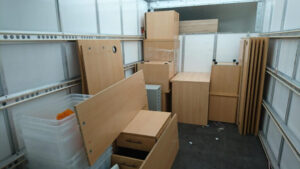
Interior view of a 5×5 storage unit at McDowell Mountain Community Storage in Scottsdale Arizona showcasing organized boxes and small furniture
A look inside a compact and secure 5×5 storage unit at McDowell Mountain Community Storage in Scottsdale Arizona ideal for boxes furniture and seasonal items

When you choose McDowell Mountain Community Storage, you benefit from:

  • Transparent storage unit prices
  • No hidden fees
  • BBB accreditation
  • Professional customer service
  • Secure and climate-controlled storage facilities
  • Accessible locations in Phoenix and surrounding neighborhoods

Our mission is to help you store your belongings with confidence, offering flexibility, security, and convenience.

Access and Security

We prioritize the privacy choices and rights of our customers. That means:

  • 24/7 video monitoring
  • Controlled access
  • Custom PIN entry
  • Locked storage units for maximum safety

Whether you’re storing family keepsakes, furniture, or important documents, you can rest easy knowing your unit is secure.

Commitment to Sustainability

We’re proud to operate with sustainability in mind:

  • Eco-friendly lighting and energy-efficient facilities
  • Recycling options for boxes and packing materials
  • Digital report tools to reduce paper waste

As a trusted storage unit operator, we believe in serving both our customers and the planet.

Get Started Today

Still have questions? Need help choosing a unit? Reach out to our friendly staff for more information, or visit us online to:

  • Browse available units
  • Check storage unit prices
  • Review services, features, and storage facility maps
  • Read verified socials and reviews from other customers

You can even manage your entire account online—from signing your rental agreement to setting up auto-pay.

Final Thoughts

A 5×5 storage unit might be small, but it packs a big punch when it comes to convenience, efficiency, and cost savings. Whether you’re storing boxes for a month or looking for climate-controlled self-storage for the year, this unit provides everything you need in one compact space.

Trust McDowell Mountain Community Storage to guide you through every step—because when it comes to protecting your belongings, we’re committed to making storage simple, secure, and innovative.

Frequently Asked Questions

1. Can I store electronics in a 5×5 storage unit?

Yes, you can store electronics like laptops, monitors, and small TVs. However, we recommend choosing a climate-controlled storage unit to prevent damage from temperature fluctuations or humidity.

2. Is insurance required for my 5×5 storage unit?

While insurance may not be required in all cases, it is strongly recommended to protect your belongings from unforeseen events like theft, fire, or natural disasters. Many storage facilities offer low-cost insurance plans or allow you to use your homeowner’s or renter’s policy.

3. How secure are 5×5 units compared to larger units?

Security features apply to all units, regardless of size. At McDowell Mountain Community Storage, our 5×5 units include surveillance cameras, gated access, and personal lockable doors—offering the same level of security as larger spaces.

4. Can I upgrade from a 5×5 unit if I need more space later?

Absolutely. If your storage needs grow, we make it easy to switch to a larger unit with minimal hassle. Please speak to our staff or manage the upgrade directly through your online account.

5. Is there lighting inside a 5×5 storage unit?

Most 5×5 units do not include individual lighting due to their compact size. However, our facility is well-lit with motion-detected hall lighting for convenience and safety.

6. What happens if I miss a payment?

If you miss a payment, we typically offer a short grace period before applying a late fee. Continued non-payment may result in restricted access and, eventually, auction procedures as outlined in your rental agreement.

7. Can I access my 5×5 storage unit anytime?

Yes, our facility offers 24/7 access, allowing you to visit your storage unit at your convenience—day or night.

8. Do I need to bring my lock?

You can bring your lock or purchase one on-site at our facility stores. We recommend a disc or cylinder lock for maximum security.

9. Can I use a 5×5 storage unit for storing business inventory?

Yes, a 5×5 unit is perfect for small business owners who need off-site space for supplies, documents, or a limited inventory, especially in high-rent areas like Las Vegas or Washington, D.C.

10. Is there a minimum rental period for a 5×5 storage unit?

We offer flexible rental terms with no long-term commitment required. Whether you need storage for one week or several months, we’ll tailor the agreement to your specific needs.

What Can Fit in a 5×10 Storage Unit?

What can fit in a 5×10 Storage Unit? A 5×10 storage unit is a highly sought-after option for individuals and businesses regarding storage solutions. Whether you are decluttering your home, moving, or needing additional storage space for seasonal items, understanding the unit sizes and restrictions can significantly help you optimize your storage requirements. While you can place various items in these units, it’s essential to remember that vehicles and boats may be subject to specific regulations. Furthermore, when storing valuable items, be sure to check the rights associated with trademarks to effectively protect your assets. Here are some tips to maximize your space: utilize vertical space to reach the ceiling, ensure items are stored close to the door for easy access, and consider your storage ideas carefully to maximize your unit.

Overview of Dimensions

5×10 storage unit is equivalent to a small room with a total area of 50 square feet. The height is typically approximately eight feet, which provides plenty of vertical space for stacking objects. This type of unit is a versatile choice for various situations, as it is ideal for storing a range of things, including closet items, seasonal decorations, and even motorcycles. If you’re considering renting a unit, it’s essential to understand the storage unit cost and the availability in your area. Whether you need a place for a truck, personal belongings, or just extra space, this is a great idea to meet your storage needs.

Typical Items That Fit

The following is a list of frequently stored items in a 5×10 unit:

Furniture

  • Compact Sofas or Couches: A compact sofa can be adequately accommodated.
  • Mattresses: A twin or full-size mattress can be stored without problems.
  • Chairs: You can stack multiple dining chairs or store a few armchairs.

Appliances 

  • Refrigerators: A mini-fridge or a small standard fridge can be accommodated.
  • Washer and Dryer: Compact and dryer sets may be accommodated.

Containers and Boxes

  • Items available during specific seasons: boxes store winter clothing, summer gear, or holiday decorations.
  • Documents and Files: Ideal for safeguarding and organizing business records.

Sporting Equipment and Bicycles

  • Bicycles: One or two bicycles and a few accessories may be stored.
  • Outdoor Gear: Camping equipment, kayaks (in specific instances), and sports equipment may be compatible.

Miscellaneous Items and Home Décor

  • Artwork: Paintings and framed photographs can be securely stored.
  • Shelves or cabinets that are compact: If necessary, disassemble more oversize furniture to conserve space.

Furniture Storage Options

Finding the appropriate furniture storage solution can be crucial whether you are downsizing, relocating, or simply decluttering your space. By selecting the right option, you can optimize your available space, such as 5×10 storage units, and ensure your possessions are secure and easily accessible. Self-storage units, comparable to the size of a walk-in closet or even a studio apartment, offer flexible storage options for various needs. Additionally, considering different locations and promotions can help you find the best price for the storage unit size that suits your requirements.

Self-Storage Units

Self-storage facilities offer a flexible and convenient method of storing furniture. Our rental units are available in various capacities, ensuring you can quickly locate one that meets your requirements.

Advantages:

  • Accessibility: You can retrieve or add items to your unit anytime.
  • A Wide Range of Sizes: From compact lockers to expansive units, you can select the ideal dimension for your furniture.
  • Security: Numerous facilities provide climate control, security cameras, and secured access.

Portable Storage Containers 

Portable storage containers are delivered to your location, enabling you to store your furniture at your leisure. After they have been sealed, the container can be stored on your property or transported to a storage facility.

Advantages:

  • Convenience: You can load and unload at your tempo.
  • Location Flexibility: The container may be stored at home or in a secure facility.
  • Protection: Containers are secure and resistant to the elements.

Warehouse Storage 

Warehouse storage is frequently employed to store mass items or larger quantities of furniture. This alternative is generally more appropriate for individuals or businesses with significant storage requirements.

Advantages:

  • Space Efficiency: Suitable for storing extensive collections or numerous pieces of furniture.
  • Climate Control Options: Numerous warehouses provide climate-controlled environments to safeguard your items.
  • Professional Management: Frequently overseen by professionals capable of offering packaging and handling services.

Indoor Storage Facilities 

Indoor storage facilities offer climate-controlled containers to safeguard valuable or delicate furniture. Typically, these units are located in secure structures.

Advantages:

  • Temperature and Humidity Regulation: Prevents upholstery and wooden furniture from being damaged.
  • Enhanced Security: Frequently outfitted with sophisticated security systems.
  • Effortless Accessibility: Access your furniture without concern for the elements.

On-Site Storage Solutions 

On-site storage solutions, such as designated areas in a garage or basement or rented shipping containers, can be effective for businesses or individuals who require temporary storage.

Advantages:

  • Immediate Access: Your furniture is readily accessible when required.
  • Cost-effective: Frequently less costly than off-site storage alternatives.
  • Short-Term Convenience: Ideal for transient relocations or renovation projects.

Friends or Family 

In certain instances, the most effective storage solution is to request that friends or family members temporarily store your furniture.

Advantages:

  • Cost-Free: This is a cost-effective alternative, as no fees are associated with it.
  • Reliability: You are confident that the items are in excellent hands.
  • Personalized Care: Your furniture will likely be handled with the utmost care by friends or family members.

Furniture Storage Tip

  1. Cleaning Before Storage: To prevent damage, ensure your furniture is both spotless and dry before storage. This careful preparation will help maintain its condition.
  2. When feasible, disassemble: When feasible, disassemble larger items to conserve space and reduce the likelihood of injury during the moving process. By breaking down these pieces, you can optimize your storage area and ensure safer handling.
  3. Utilize protective coverings: Furniture covers or blankets can safeguard against scratches and dust.
  4. Label all items: Labeling will facilitate the subsequent retrieval of items if you employ multiple storage units or crates. 

Boxes and Bins Packing Techniques

Boxes and Bins Packing Techniques

Packaging can be daunting, whether decluttering your home, preparing for a move, or storing household items for the long term. However, the process can be made more efficient and smooth by utilizing boxes and bins based on the size of the storage unit you choose to rent. A well-organized packing menu can help you keep track of what to pack and how to store items like bedroom furniture. 

Selecting Appropriate Bins and Boxes

The size should be taken into account:

  • Use smaller boxes for bulkier, lighter items, such as clothing and bedding, and larger cartons for heavier items, such as books.
  • Clear containers are recommended to identify contents, particularly toys or seasonal items.

Material Factors:

  • Cardboard crates are lightweight and convenient for stacking; however, they may not protect delicate items effectively.
  • Plastic containers are an excellent choice for long-term storage due to their durability, waterproofness, and ability to withstand various conditions.

Methods of Packing

Layering for Stability

  • Base Layer: To ensure stability, begin with the heaviest items at the bottom of the box or container. For instance, prioritize packing books or other dense items.
  • Middle Layer: Layer lighter items, such as garments or linens, on top of heavier items. This aids in the preservation of equilibrium and the prevention of compression.
  • Top Layer: Conclude delicate or lightweight items, ensuring they are adequately cushioned to prevent harm during transportation.

Cushioning and Wrapping

  • Utilize packaging paper to wrap fragile items and cushion them from impact individually.
  • Bubble wrap or foam padding is recommended for fragile items to mitigate shocks.
  • Fill Gaps: To prevent movement, fill empty spaces in cartons with packing peanuts, crumpled paper, or towels.

Folding vs. Rolling

  • Clothing: Roll clothing rather than fold to conserve space and minimize creases. This method is particularly effective for lightweight items such as trousers and T-shirts.
  • Towels and Linens: Roll towels and linens and store them in containers to optimize space and safeguard them from creasing.

Labeling and Organizing Color Coding:

To facilitate identification, assign colors to distinct categories (e.g., kitchen goods in blue, bedroom items in green).

  • Descriptive Labels: Label each box or bin with its contents and the chamber to which it belongs. For instance, “Kitchen: Dishes” or “Living Room: Books.”
  • Inventory List: Compose an inventory list of each box or bin’s contents for fast reference. This is particularly advantageous for extended storage.

Strategic Stacking

  • The bottom is the most heavily populated. When stacking boxes, arrange the heaviest boxes at the bottom and the lightest at the top to prevent crushing.
  • Form a uniform stack: To optimize stability and prevent tipping, ensure that boxes are arranged uniformly.

Storage for Long-Term Use 

  • Climate Control: Crates and bins should be stored in an excellent, dry location to safeguard items from temperature fluctuations and moisture.
  • Boxes should be raised: store crates on shelves or pallets to prevent water damage in the event of flooding and keep them off the ground.
  • Accessibility: Arrange frequently used items at the top or front of your storage area to facilitate simple access. 

Office Supplies and Documents

A well-organized office can substantially increase productivity and alleviate stress. Establishing a system for managing office supplies and documents is essential, whether you are working from home or in a traditional office setting.

Evaluate Your Office Supplies 

Inventory Your Supplies: Inventory your office supplies, such as staples, binders, paper, and markers. Identify the items that are frequently used and those that can be discarded.

Categorize Items: Divide your supplies into technology, desktop organizers, paper products, and writing instruments. This will simplify locating the item you require at the appropriate time.

Office Supply Storage Solutions

Desk Organizers

Utilize desk organizers or caddies to provide simple access to frequently used items, such as paper clips, sticky notes, and pens. To optimize space, contemplate a multi-compartment organizer.

Drawer organizers

To enhance organization, install drawer organizers to separate and categorize smaller items, such as highlighters, push pins, and elastic bands. This approach not only maximizes space but also makes it easier to find what you need quickly. This maintains the cleanliness of compartments and mitigates the accumulation of debris.

Shelving Units

To maximize your storage space, utilize bookcases or shelving to accommodate larger items, such as notebooks, binders, and reams of paper. This strategy not only helps keep your space organized but also makes accessing your materials more convenient. For safety reasons, it is recommended that heavier products be stored on lower shelves.

Solutions for Wall Storage

Employ wall-mounted organizers or pegboards to ensure that supplies are easily accessible. Hooks can store scissors, ribbons, or other tools, freeing up workstation space.

Document Organization

Physical vs. Digital

Determine the documents that require physical storage and those that can be stored digitally. Transitioning to a digital system can facilitate retrieval and conserve space.

File Management System

Establish an organized filing system for physical documents. Utilize labeled folders or binders to organize documents by project, client, or topic.

Color Coding

Implement a color-coding system for your files. For instance, financial documents should be blue, client files should be green, and project materials should be yellow. This will facilitate quickly locating products.

Document Scanning

It is advisable to scan critical documents and store them in a secure cloud service. This minimizes physical clutter and guarantees that critical files are readily accessible and backed up.

Routine Upkeep

Arrange for Consistent Decluttering

Allocate a specific amount of time each month or quarter to organize your office supplies and documents. Reorganize as needed and discard items that are no longer required.

Evaluate Storage Solutions

It is essential to periodically evaluate your storage solutions to ensure that they continue to satisfy your requirements. As your work progresses, it may be necessary to modify your organizational strategies.

Establish a Filing Routine

Establish a consistent procedure for promptly submitting new documents. Maintaining a filing system, whether daily, weekly, or monthly, prevents piles of paper from accumulating.

Checklist of Essential Office Supplies

Here is a checklist of essential items to guarantee that you have the appropriate supplies for your workspace:

  1. Writing Instruments: Markers, highlighters, pencils, and pens
  2. Paper Products: Notepads, adhesive notes, and printer paper
  3. Desk organizers, labels, containers, and binders comprise organizational supplies.
  4. Technology: Printer, scanner, and computer accessories (keyboard, mouse)
  5. Cleaning Supplies: Microfiber clothes for screens and disinfectant swabs 

Recommended Storage Strategies

Consider the following suggestions to optimize your storage unit:

  • Utilize Vertical Space: Stacking crates and items requires the unit’s height. Shelving units should also be considered for improved organization.
  • Label all items: Ensure that crates are clearly labeled to facilitate the retrieval of items when necessary.
  • Disassemble Items of a greater size: Furniture can be disassembled to increase storage capacity and free up additional space.
  • Establish an aisle: Leave a small aisle to quickly access frequently used items.

Creating an Inventory List

An inventory list is critical for managing personal possessions, office supplies, or business assets. A well-organized inventory list can greatly assist in managing your possessions, preventing loss, and facilitating the retrieval of necessary items when needed. Regardless of whether you are moving, decluttering, or operating a business, having such a list ensures efficiency and peace of mind.

Determine the Objective of Your Inventory List

Before commencing, determine the objective of your inventory list. Are you managing stock for your business, monitoring office supplies, or cataloging personal belongings for insurance purposes? Comprehending your objective will enable you to customize your inventory list to satisfy your precise requirements.

Select Your Format

Digital Inventory Lists:

  • Spreadsheets: Use software such as Google Sheets or Microsoft Excel to organize and modify data. Spreadsheets also facilitate total calculation, categorizing, and filtering.
  • Inventory Management Applications: It is advisable to employ inventory management software or mobile applications that provide real-time updates and barcode scanning capabilities.

Physical Inventory Lists:

  • Notebook or Binder: For those who prefer pen and paper, it is recommended that you have a notebook or binder specifically for your inventory. Utilize dividers to organize distinct sections.

Establish Categories

Managing and locating products will be simplified by categorizing your inventory. Common categories consist of:

  1. Furniture: Desks, tables, chairs, and so forth.
  2. Office Supplies: Folders, paper, pens, and more.
  3. Electronics: Printers, computers, phones, and so forth.
  4. Personal Items: Clothing, accessories, memorabilia, and so forth.
  5. Stock or inventory (for businesses): Products, materials, etc.

Compile Essential Information for Each Item

Including critical information that will facilitate the identification and tracking of the items. The subsequent details should be taken into account:

  1. Item Name: A concise description of the item.
  2. Quantity: The quantity of units in your possession.
  3. Location: Where the item is stored, such as a chamber, shelf, or box.
  4. Condition: Please observe the item’s condition, whether it is new, used, or damaged.
  5. Purchase Date: The date the item was acquired, which can be used to monitor warranty periods or depreciation.
  6. Value: The assessed value of the item for insurance purposes.

Maintain Your Inventory List

  • Consistent Updates: Make it a routine to revise your inventory list whenever you acquire or dispose of items. This will ensure that your list remains current and accurate.
  • Annual Evaluations: Arrange an annual inventory evaluation to evaluate the remaining items and those that can be replaced or declassified.
  • Ensure the Safety of Your Digital Lists: When using digital tools, it is essential to routinely back up your files to prevent the loss of valuable information.

Optimize Your Inventory List

  • Use your inventory list to ensure that all items are packaged and accounted for during a relocation. This practice can significantly facilitate the unpacking process and help alleviate tension, allowing a smoother transition into your new space.
  • Insurance Claims: A comprehensive inventory list will simplify the process and guarantee that you receive the appropriate compensation for lost or damaged items if you need to submit an insurance claim.
  • Tax Deductions: Maintaining an accurate inventory list is crucial for business owners, as it can help them monitor expenses and identify deductions during the tax season. By doing so, they can maximize their potential savings and streamline their financial reporting.

Conclusion

A 5×10 storage unit is an exceptional choice for individuals wishing to store diverse items without occupying excessive space. By comprehending what type of content is appropriate and employing intelligent organization strategies, customers can optimize their storage experience and notice many benefits. A 5×10 unit can help maintain the security and safety of your possessions, whether you are in the process of transferring, decluttering, or simply need additional space. Moreover, this size is ideal for ensuring that your belongings remain organized and protected throughout any transition. Remember that renting a unit also features certain taxes and fees, so be sure to check with your state’s regulations.

Frequently Asked Questions (FAQ)

What are the dimensions of a 5×10 storage unit?

A 5×10 storage unit is 10 feet in length and 5 feet in width, with an average height of 8 feet. This results in a total stowage area of approximately 50 square feet.

What is the maximum capacity of a 5×10 storage unit?

A 5×10 storage unit can typically accommodate the contents of a modest one-bedroom apartment. This may include a mattress, bed frame, small settee, chairs, boxes, and seasonal items.

Can large furniture be accommodated in a 5×10 storage unit?

Indeed, it is feasible to accommodate substantial furniture pieces within a 5×10 storage unit; however, it is most advantageous for smaller items. Consequently, if you plan to store larger items, consider supplementing your storage solution with a larger unit to ensure everything fits comfortably. For instance, you can store a bureau, a couch, a wardrobe, a queen-size or full-sized mattress, and boxes alongside other items like luggage and a bicycle. Nevertheless, larger items, such as sectional sofas or dining tables, may need to be accommodated elsewhere to ensure adequate space.

What are the most suitable products for a 5×10 storage unit?

The following objects are suitable for a 5×10 storage unit: First, smaller furniture items like chairs and end tables can fit comfortably. Additionally, boxes containing seasonal clothing or decorations are ideal for efficient use of space. Moreover, sports equipment, such as bikes and skis, can be stored with little room.

What are the most effective methods for optimizing the space in a 5×10 storage unit?

To optimize space:

  • Furniture disassembly: To conserve space, disassemble bed frames, tables, and shelving.
  • Utilize vertical space: Utilize shelving units and stack crates to optimize the unit’s height.
  • Completion of deficiencies: To address completion of deficiencies, arrange smaller items within larger ones, such as placing packing crates inside a dresser. This not only maximizes space but also helps keep your belongings organized and easily accessible.
  • Boxes should be clearly labeled to facilitate the identification of objects without the need to unpack everything.

Is storing sensitive objects in a 5×10 storage unit permissible?

Although a 5×10 storage unit can accommodate delicate items, it is crucial to consider the environment in which they are stored. Consequently, ensuring proper climate control and protection from potential damage will help preserve the integrity of your belongings. In addition, taking precautions such as using protective packaging can further enhance the safety of your items. Avoid storing electronics, documents, or photographs in high humidity or temperatures. Consider a climate-controlled unit if necessary.

How can I retrieve my belongings from a 5×10 storage unit?

Most storage facilities offer easy access to your unit during business hours. A key or access code will be provided to enable you to access the facility. Ensure your unit is well-organized to facilitate the effortless retrieval of items when required.

Is a 5×10 storage unit secure?

Most storage facilities employ security measures, including gated access, surveillance cameras, and individual locking for each unit. It is imperative to select a reputable facility to guarantee the safety of your items.

What items should I avoid storing in a 5×10 storage unit?

The following items should not be stored in your unit: First, hazardous materials, such as chemicals and flammable substances, pose safety risks. Additionally, perishables, including food and plants, can spoil and attract pests. Furthermore, valuable items like cash and important documents should be kept in secure locations to ensure their safety.

What is the cost of a 5×10 storage unit?

The price of a 5×10 storage unit depends on the facility’s amenities, demand, and location. The average monthly cost ranges between $50 and $150; however, it’s worth checking for any discounts that may be available. Additionally, different types of self-storage facilities often offer varying prices based on the size of the storage unit and the services included. Therefore, exploring your options can help you find the best deal for your needs. Please consult with the facilities in your area for specific pricing information.

Our Professional Advice Will Enable You to Determine Which Items are Optimally Suited for a 5×10 Storage Unit.

Selecting the appropriate storage unit can be difficult, particularly when determining what can be accommodated in a 5×10 space. A well-organized unit will help prevent congestion and guarantee you only pay for the necessary space. At McDowell Mountain Community Storage, we are committed to assisting you in determining what is appropriate for your 5×10 storage unit.

Our team, with their extensive knowledge and experience, is committed to providing you with the information necessary to make well-informed decisions regarding self-storage. Whether you are storing personal items, furniture, a car, or a motorcycle, we will help you optimize the potential of your 5×10 unit. Furthermore, we are dedicated to assisting you in evaluating your possessions, which enables you to ascertain whether this condensed space meets your requirements. Specifically, we will help you consider various storage unit sizes to ensure the best fit for your needs.

There is no longer any need to make assumptions about what will work. Our professional guidance will provide essential information regarding the categories of items most suitable for a 5×10 storage unit. For example, you can store sports equipment, boxes, furniture, and vehicles. Additionally, we will guide you on optimizing the space to ensure that all items are stored safely and efficiently. Specifically, we will consider the ceilings and any unique requirements you may have.

Investigate Our Additional Resources for Additional Storage Solutions:

Whether you need short-term storage during a move or a long-term solution for your possessions, our team is dedicated to assisting you at every stage of the process. Additionally, we will provide guidance and support to ensure your storage needs are met effectively. To learn how we can enhance your storage experience and ensure the safety of your valuables, please contact us today to make a reservation or inquire about storage unit prices and size guide.