
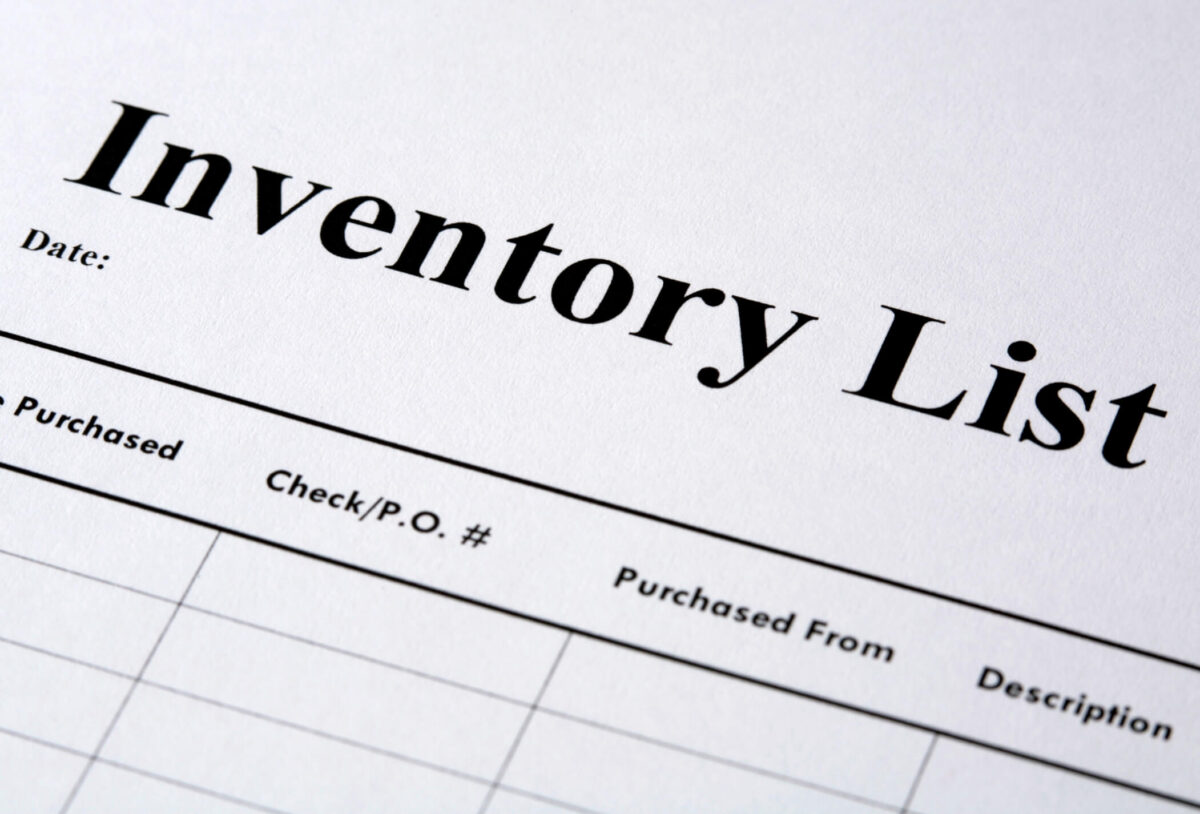
How to Create an Inventory for My Storage Unit?

Organization is essential when storing your belongings in a self storage unit. A well-structured inventory system not only assists in managing your supplies but also offers the advantage of minimizing tension and saving time when retrieving anything. By conducting a thorough audit, you can ensure that all possessions, whether seasonal items, valuable belongings, or important documents, are correctly accounted for. The reasons to maintain a self-storage inventory are clear—it helps you optimize storage space and guarantees that your items are easy to locate when needed. Here is a way to generate an inventory for your storage unit to maximize its benefits.

Organize Your Items

It is beneficial to categorize each item before listing it. Categories will facilitate the subsequent retrieval of specific products and maintain the organization of your inventory. Common categories consist of:

  • Furniture: Tables, chairs, sofas, and so forth.
  • Electronics: Speakers, PCs, televisions, and so forth.
  • Seasonal Items: Winter clothing, holiday decorations, and so forth.
  • Documents: Tax papers, legal documents, and other significant files.
  • Personal Items: Clothing, literature, memorabilia, and other personal items.

Label Containers and Boxes

After you have organized your possessions, clearly indicate the contents of each box or container along with the box number. This procedure necessitates efficient retrieval, and there are a variety of ways to label your items, ensuring that everything is easy to identify. Ensure that the labels are legible and of sufficient size, and position them in a prominent location on the container. Employ a permanent marker or pre-printed words to prevent fading or staining over time.

How to Create an Inventory for My Storage Unit In Scottsdale, AZ

Create a Master Inventory List

Create a master inventory list after your products have been categorized and labeled. This can be accomplished using a mobile application, a spreadsheet, or paper. Key information that must be incorporated into each item is as follows:

  • Item Name: A succinct description of the item, such as “Winter coat” or “Leather sofa.”
  • Category: The category in which the item is classified (e.g., “Clothing,” “Furniture”).
  • Quantity: The quantity of each item that is being stored.
  • Condition: Any significant information regarding the condition (e.g., “New,” “Scratched”).
  • Locations: The precise region or container where the item is situated (e.g., “Box 3, the left side of the unit”).

Capture a Picture of Your Thing

A visual record of your stowed items can be exceedingly beneficial, particularly for insurance purposes. Capture images of electronics, high-value items, or anything you wish to have documented. For convenient access, maintain these images in digital format alongside your inventory list, which could include columns for details like box numbers and descriptions. This effort will make it easier for businesses or people helping you to identify and track items quickly. Keep one version of the list and images organized to support your plan for future access.

Use Storage Unit App or Software

Various storage management software and applications are available to assist in creating and monitoring an inventory of your possessions. These applications frequently enable users to upload photos or scan barcodes, expediting the process and making it easier to track items with a sense of clarity. The following are some of the most frequently selected alternatives, each offering helpful features to streamline inventory management.

  • Sortly: Sortly is a visual inventory management application.
  • Encircle: An application for home inventory that emphasizes insurance claims.
  • InventoryBase: InventoryBase is a comprehensive inventory management application.

Maintain a Back-up

Maintaining a reserve guarantees the security of your inventory. For example, consider scanning or photographing the physical inventory list to generate a digital copy. To ensure your digital inventories are accessible from any device, utilize cloud storage services such as Dropbox, Google Drive, or iCloud. A good step is to create a map or a digital record of your shelving system and box numbers so you and others can quickly locate items. You can also share this information with family members via phone or other communication tools, making it easier for everyone to access and manage your inventory across different rooms or storage spaces.

Make Regular Inventory Updates

Ensure your inventory is updated as you add or remove anything from your storage unit. This will guarantee that your list is consistently precise and up-to-date. A helpful tip is to sort through your belongings occasionally and move items that no longer matter to another location or out of the unit. This guide can help you stay organized and make room for things that truly matter in your life or house. Periodically evaluating your inventory simplifies your possessions and ensures that someone else doesn’t have to do it later.

Keep a Copy of Your Inventory Off-Site

To enhance security, store a duplicate of your self-storage inventory in a secure location outside the storage unit, such as a secure cloud account, email, or external hard drive. This is particularly critical if your storage unit contains valuable or irreplaceable items. Keeping a back-up of your data gives you peace of mind, knowing that in case something happens, you can easily access notes and information about your things. Sorting your stuff and having one central place to store important details about your items can save a lot of work and provide a clear idea of how to manage your belongings. With a few simple steps, you can ensure that your thoughts on storage are backed up, offering peace of mind for the long run.

How to Create an Inventory for My Storage Unit In Scottsdale, Arizona

Conclusion

An inventory of your self-storage unit is a straightforward yet highly effective method of guaranteeing that your assets are organized and easily accessible when required. You can efficiently manage your space by creating a catalog, sorting items, and following a checklist. Using technology to track and update your inventory can provide ease and ensure accountability. Various options, from labeling containers to auditing your inventory, offer you the choice and flexibility to maintain your unit. Regularly updating your inventory plan will help you stay on top of your assets, providing tips for efficient storage management.

Frequently Asked Questions

What occurs if I misplace my inventory list?

If your inventory list is lost, it can be rebuilt using distinct labels and photographs on each container. Check your cloud storage or email for a backup if your list is digital. Maintaining a duplicate of your inventory in a secure, off-site location is imperative to prevent its complete loss.

What is the most effective method for organizing my storage unit according to the inventory?

Arrange your storage unit by categorizing similar items. For instance, it is advisable to position furniture in the rear of the unit and seasonal items in the front. This will simplify the process of locating items and guarantee that your inventory corresponds to the actual contents of your unit.

What is the most effective method for managing inventory when you have multiple storage units?

If you possess multiple storage units, it is recommended that you either maintain a master list that delineates the items that are stored in each unit or construct individual inventories for each unit. Staying organized necessitates labeling each container with the unit and container numbers.

What if I have a limited number of items to store?

Even if you have a limited number of items to store, it is still beneficial to establish a basic inventory. It ensures everything is in order and provides a reference for future requirements. A concise inventory can also be equally effective in preventing the misplacement or confusion of your possessions.

Is it permissible to utilize an inventory for insurance purposes?

A comprehensive inventory that includes descriptions, quantities, and photographs can be exceedingly beneficial for theft, loss, or damage insurance purposes. Absolutely. List valuable items and, if feasible, include their condition and any receipts or proof of purchase.

What measures can I take to guarantee the security of my inventory?

Keep a copy of your inventory in a secure location as a back-up. Store your digital inventory on cloud services like Dropbox, Google Drive, or iCloud. Consider scanning or photographing physical inventories and storing them digitally.

What should I do if I neglect the contents of my storage unit?

If you need help remembering the contents of your unit, consult your inventory list. A master list and clear labels facilitate identifying the contents of each box without the need to explore the entire unit. Additionally, photographs may prove advantageous as visual aids.

What actions should I take before storing an item if I am still determining whether to retain or donate it?

If you are still determining whether to retain an item, establish a transient category for items you are contemplating donating. You may modify your inventory later after you have concluded. This method enables you to maintain the organization of your storage unit while also spending the necessary time assessing the value of each item.

What is the most effective method for managing sentimental products in my inventory?

When including sentimental items (such as photos, heirlooms, or mementos), it is essential to provide a concise description and acknowledge their emotional significance, if applicable. Additionally, it may be beneficial to take additional photographs to document the significance of the items, as this can assist in preserving memories beyond the mere monitoring of possessions.

Can I monitor rental payments or agreements using my storage unit inventory?

Although your inventory’s primary focus is your possessions, it is possible to establish a distinct section in your inventory file to monitor rental payments and rental agreement. This will assist you in maintaining your organization and guarantee that you always succeed in meeting a payment or renewal deadline. 

Expert Guidance for Creating an Inventory for Your Storage Unit

At McDowell Mountain Community Storage Company, we recognize that organizing and monitoring your possessions in a storage unit can be overwhelming. It is essential to maintain order and readily locate your possessions by creating an accurate inventory, regardless of whether you store personal items, business inventory, or seasonal goods. Our team of experts is available to assist you in categorizing your items and establishing a suitable labeling system for your needs. We suggest employing straightforward categories, such as furniture, electronics, and documents, and utilizing digital tools like spreadsheets or inventory apps to ensure your list is readily accessible. In addition to taking photographs, we recommend noting serial numbers for high-value items to enhance security.

We provide solutions to assist you in maintaining your organization, whether you’re storing a few items or a lot, making it a breeze to keep track of. Our professionals can help you develop a customized solution that meets your needs, whether temporarily storing items or needing a long-term inventory management system. A well-maintained inventory will save you time and effort, giving you peace of mind by knowing that the ones you need can be easily located. Please contact us today for expert advice on the most effective methods for creating and managing your storage inventory.


Tips for Organizing Your Self-Storage Unit

Need a location to keep your belongings? A nearby climate-controlled storage facility may provide self-storage units for rent. These storage units offer a solution for people who need short- or long-term storage before, during, or after a move.

To avoid losing track of everything you have, just be sure to pack, organize, and plan the storage unit. After all, what good is it if you need help finding what you’re looking for in a storage facility? Hint: not at all good. We can assist if you need help setting up a storage unit. You can maximize your unit’s interior capacity and enhance your storage experience with our straightforward organization tips and packing hacks.

This blog post offers tips for organizing your self-storage unit. So keep on reading.

Common Mistakes People Make When Organizing Their Self-Storage Units?

Organizing a self-storage unit can be a challenging task. Still, it becomes even more complicated when people make common mistakes, leading to disorganization, wasted space, and difficulty accessing their belongings.

Here are some of the most common mistakes people make when organizing their self-storage units:

  1. Failing to plan:  One of the biggest mistakes people make is not having a clear plan before moving their items into the storage unit. Without a plan, you may randomly place items, leading to inefficiency and difficulty finding them later. Take the time to plan and visualize how you want to organize your unit before you start.
  2. Not labeling boxes: Neglecting to label boxes is a recipe for confusion and frustration. When you need to find something in the future, you’ll have to go through each unlabeled box to locate it. Always label your boxes with a brief description of the contents, making it easier to identify what’s inside without opening them.
  3. Overpacking and underutilizing space: Many people tend to overpack boxes or stack them haphazardly, failing to consider available space. Overpacking can lead to damaged items, while underutilizing space wastes potential storage capacity. Optimize space by using appropriately sized boxes, filling them, and stacking them efficiently.
  4. Neglecting to create aisles:  A lack of designated walkways and aisles within the storage unit is a common mistake. You may have to move multiple boxes or items without clear paths to access something you need. Leave ample space between rows of items to create easily accessible aisles so you can reach any part of your unit without hassle.
  5. Forgetting about regular maintenance: Dust and dirt can accumulate in a storage unit over time. Neglecting regular maintenance, such as cleaning and organizing, can lead to a messy, unmanageable space. Schedule periodic visits to your storage unit to clean, organize, and ensure everything remains in good condition.

By avoiding these common mistakes, you can ensure a well-organized and easily accessible self-storage unit that maximizes space and keeps your belongings in good condition.

Tips for Organizing Your Self Storage Unit

8 Tips for Organizing Your Self-Storage Unit

Here are 8 storage tips to organize your self-storage unit.

Label your boxes

Priorities come first. Labeling your storage bins or boxes is one of the most crucial components of storage unit organization. It might be stressful when you’re looking for that one book for a book club, but can’t remember which boxes are for “books” and which are for “kitchen”! Label every box to avoid making this simple error. A box number, the room it originated from, and a description of everything within should all be written at the top and on at least one side of each box. Please be as specific as possible.

It can seem like a waste of effort to unpack and repack boxes to mark them if you’ve already packed everything. However, you’d be happier if you took the time to search your unit immediately rather than waiting until later.

Make a master list

Make a master’s list once you’ve labeled every box. Even while it may seem ominous, it will ultimately be beneficial. Note the box number and contents for every box container in your storage unit. You’ll get a reference sheet for each item that is located this way. If you’re computer literate, you can also build or copy the list into a Word or spreadsheet document and try sorting it out for a better outcome.

Map it out

Making a map of your storage space is an excellent way to keep it tidy. It’s ideal to have a basic sense of where everything is in your storage unit, rather than a precise architectural layout with dimensions (though it’s possible if you like). It might be a simple sketch that divides your storage unit into areas for each room. Pack the kitchen boxes, bedroom boxes, office boxes, and so on all together. When you need a specific item or box later, even designating a small portion of your storage space to a particular area might be helpful.

Stack Everything

Maximizing storage space is crucial, and height is vital to achieving it. Surprisingly, most storage units are 10 feet or taller, providing ample vertical room for your belongings, including keepsakes, mementos, photos, albums, scrapbooks, paperwork, documents or files, electronic appliances, sports equipment and gear, and hobby supplies. To ensure stability and prevent accidental toppling, we advise placing sturdy, large boxes or goods at the base of your stack while positioning lighter or smaller boxes on top. Additionally, you can optimize space utilization by stacking furniture, such as tables, on top of one another. By employing these strategies, you can maximize your storage space while safeguarding and organizing your cherished items.

Put items that you need to access in the front

Place everything you’ll frequently need to access toward the front of your storage container. As a result, you won’t have to dig around in the back of your unit whenever you need certain products, because they will always be nearby and easy to find. Winter clothing like coats or boots for seasonal weather, paperwork documents for the office or school, or holiday decorations are a few examples.

You may even use a special remark or a distinct color to draw attention to these tote boxes before you begin packing everything into your self-storage unit, so that you remember to place them at the front.

Make a center aisle

Your self-storage unit could quickly turn into an impossible maze. Make a central aisle to avoid the pain and embarrassment of struggling to reach the back of the storage unit. Your belongings will still have plenty of areas to spread out, and any boxes in the back of your storage unit are still within easy reach.

Allow your items to breathe

Even if your storage container is climate-controlled, allowing air movement is still crucial. Packing boxes on top of pallets will allow air to circulate beneath them. Additionally, consider leaving a little gap between the walls of your storage room and your belongings to allow for ventilation.

Get stylish and get shelving

Although you may not feel your storage container needs shelving, it might be useful. Utilizing your storage space’s height strategically is essential, but you should avoid putting fragile items like glassware on top of other items. Making the most of your available space with shelves also ensures that nothing will accidentally fall and shatter.

Wrapping Up

We sincerely hope these tips and advice have helped you organize your storage unit and keep your things in order. Check out McDowell Mountain Community Storage if you’re doing preventative research and are now looking for inexpensive storage nearby. To give you the ideal storage option for all your things, we offer a range of unit sizes and high-quality amenities!

Conclusion

Organizing your self-storage unit doesn’t have to feel overwhelming. With a clear plan, labeled boxes, mapped-out sections, and designated pathways, you can dramatically improve both efficiency and accessibility. Creating a simple system that allows you to sort items by category, rotate seasonal belongings as needed, and keep frequently used boxes within reach will save you time and frustration in the long run. By maintaining order and making thoughtful use of vertical space and shelving, your storage unit can remain functional, easy to navigate, and stress-free whenever you need to access your belongings.

Find Your Ideal Storage Unit Now

Discover the perfect storage solution to place items for your needs at McDowell Mountain Community Storage. With a wide range of unit sizes and convenient amenities, we make storage easy and accessible.

Take the first step towards an organized and stress-free life—find your ideal storage unit now! If you have any questions, contact us at (602) 899-5484.

Tips for Organizing Your Self Storage Unit In Scottsdale AZ

Frequently Asked Questions

What is the best way to pack items in a storage unit?
Start by sorting your belongings into clear categories so everything has a designated place. Use sturdy cardboard boxes for lightweight items and durable plastic bins for anything sensitive to moisture. Keeping similar items together makes it easier to track the amount of boxes you have and simplifies future organization.

How should I arrange my storage unit for easy access?
Create a clear path from the door to the back of the unit so you can move around safely. Leave small spaces between stacks to improve accessibility and airflow. This setup lets you quickly reach items without unloading everything.

How can I store furniture properly?
Disassemble large pieces when possible and store chairs upside down on tables to save room. Use the inside of drawers to hold smaller items, but avoid overloading them. Placing furniture along the walls keeps the center open and organized.

How do I keep track of everything in storage?
Label boxes clearly and create a list of item locations within your unit. Keeping an inventory gives you peace of mind and prevents unnecessary searching. A simple tracking system ensures you always know where your belongings are stored.

How can I maximize space in my self-storage unit?
To maximize space in your self-storage unit:

  • Prioritize arranging items based on size and frequency of use.
  • Place larger, less frequently needed items at the bottom or back of the unit, and keep items you’ll access more often towards the front.
  • Make use of vertical space by stacking securely and using shelving units.

This approach maximizes floor area and helps maintain an efficient, organized space in your self-storage unit.

What are some tips for organizing my self-storage unit efficiently?
Organizing your self-storage unit efficiently requires a strategic approach. Begin by categorizing your items before you move them into the unit. Once categorized, arrange these items in a way that allows for easy access. Use labels on boxes and bins to quickly identify contents. A logical system might involve grouping similar items or storing items by season or use. Secure shelving units can provide a stable platform for stacked items, making the best use of vertical space and keeping your floor area clear.

Are there specific storage containers or bins that work best for an organization?
Yes, certain types of storage containers and bins are more effective for keeping your self-storage unit organized. Look for durable, stackable containers with secure lids to protect against dust and damage. Clear bins can be especially helpful because they let you see the contents without opening them. For clothes or fabrics, consider using vacuum-seal bags to save space and protect against moisture. Ensure that all containers are manageable to facilitate easy handling and rearrangement.

How do I categorize and label items in my self-storage unit?
Categorizing and labeling items in your self storage unit begins with dividing your belongings into logical groups. You might categorize by item type (e.g., books, kitchenware, clothes), by event (e.g., holiday decorations), or by season (e.g., summer gear, winter coats). Once categorized, label each box or bin clearly with a detailed description of its contents. Labels can be placed on multiple sides for visibility regardless of orientation. An efficient labeling system reduces the need to search multiple boxes for a single item.

Are there any strategies for preventing damage to items in the storage unit?
Preventing damage to items stored in a self-storage unit involves several vital strategies. Use bubble wrap or other protective materials for fragile items. Ensure that boxes are not overpacked to avoid crushing and that shelving units are not overloaded to prevent collapsing. Keep items off the floor using pallets or tarps to protect against potential water damage. Finally, ensure your storage unit is clean and secure to guard against pests and theft.

What are effective ways to declutter and maintain an organized storage unit over time?
Effective ways to declutter and maintain an organized storage unit include regular reviews of its contents, ideally once or twice a year. During each review, assess whether each item still serves a purpose or holds value. Be prepared to donate, sell, or discard items that no longer meet your needs. Continuously update your inventory and labeling system to reflect any changes. Implementing these practices ensures your self-storage unit remains a functional, efficient space that meets your storage needs over time.

Updated February 12, 2026